
March of the Ants: Slow Down These Spring Pests With IPM
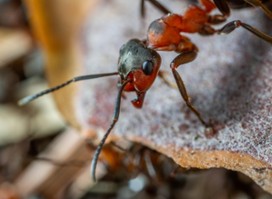
Ants are one of the most prevalent structural pests. One estimate suggests there are as many as 20 quadrillion ants on earth, with a total biomass that equals 20% of that of all humans and exceeds that of wild birds and mammals (Novotny & Budejovice, 2022). Understanding ants, the risk they pose and corresponding integrated pest management (IPM) techniques can promote the health and safety of school staff and students.
As the weather begins to warm, dormant ant colonies become active and begin looking for new food sources and nesting sites. In northern states (zones 3-6), ants usually become active in late April, and in southern states (zones 8-10), ant activity may begin as soon as March (Anderson, 2025). For this reason, now is an excellent time to begin preparing your school’s ant IPM program.
There are more than 15,700 named ant species and subspecies of ants, with possibly more unnamed (Novotny and Budejovice, 2022). They are social insects, and each type of adult has a designated responsibility (Rust and Choe, 2012). Although ants are highly diverse, a few defining characteristics include having a large head, elbowed antennae, and constricted body that gives the appearance of a small waist. Ants go through complete metamorphosis, meaning that they pass through egg, larval, pupal and adult stages. If you are interested in further guidance, the University of California’s Statewide Integrated Pest Management Program offers an online tool to identify common household ant species (University of California IPM, n.d.).
Ants enter school buildings when seeking food, water or refuge from unsuitable weather. Specific food preferences vary by species, but in general ants feed on sugary substances, fat and meat. Many species will nest in soil beside schools, but others, such as the pharaoh ant (Monomorium pharaonis) may nest indoors. Ants have also been known to nest in potted plants (Rust and Choe, 2012).
Some species of ants pose the risk of direct harm to school students and staff. Native fire ants, red imported fire ants (Solenopsis invicta), velvety tree ants (Liometopum occidentale) and harvester ants are known to sting or bite and may be a concern at schools if they are present. Other common species of ants rarely bite.
Monitoring and documenting pest presence is an important step in any IPM program. Keep a close eye on potential food sources such as kitchens, cupboards and areas near trash bins. Note that single, straggling ants are likely scouts who are searching for food and nesting sites, while trails of ants indicate a path to a nest or food source. As with other pests, it is important to monitor and document entry points in foundations, walls and windows (Rust and Choe, 2012). With the right training, monitoring and documenting pests is something that many members of a school community can participate in.
After monitoring, practice exclusion and sanitation in any areas of concern. Caulk any cracks or crevices, store food items in sealed containers, wash dishes, clean up spills, and remove trash daily. Fixing leaky hoses, sinks and faucets can deter ants seeking water (Rust and Choe, 2012). Baits and other insecticide treatments are effective but are best left to pest management providers and other professionals. Keeping ants out, prioritizing cleanliness and making school buildings unattractive to ants are great prevention techniques.
The Pest Defense for Healthy Schools provides a free ant curriculum to teach high school students about ants and IPM. Click here to view this curriculum and others: https://pestdefenseforhealthyschools.org/curricula/
Check out these articles from The Pest Defense for Healthy Schools blog to learn about managing other pests:
Back to School: Don’t Let Lice Tag Along
How to Prevent Tick Bites This Fall
Why IPM for Mosquitoes is More Important Now Than Ever
Creating a Rodent IPM Plan for Your School
Sources
Anderson, G. (2025, June 22). When is ant season? Complete Guide to Ant Activity Patterns. EcoGuard Pest Management. https://www.ecoguardpestmanagement.com/blog/ants/when-is-ant-season
Key to Identifying Common Household Ants. University of California IPM. (n.d.). https://ipm.ucanr.edu/tools/antkey/index.html
Novotny, V., & Budejovice, C. (2022, August 9). The abundance, biomass, and distribution of ants on Earth. Proceedings of the National Academy of Sciences (PNAS). https://doi.org/10.1073/pnas.2201550119
Rust, M. K. R., & Choe, D. H. (2012, October). Ants. University of California IPM. https://ipm.ucanr.edu/home-and-landscape/ants/#gsc.tab=0