
Back to School: Don’t Let Lice Tag Along
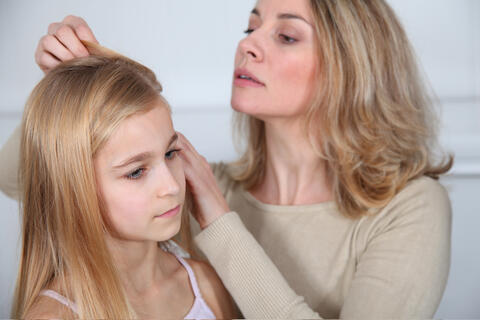
With the holidays over, kids are bundled up and on their way back to school. As students spend more time with their peers, they have the opportunity to share hats, scarves and, potentially, the transmission of head lice (Harel, 2024). Head lice are most common among preschool and elementary school age children and the people who live with them (CDC, 2024), making this an important pest for anyone involved in integrated pest management in schools.
Head lice are parasitic insects that feed on blood and can be found on the head, eyebrows and eyelashes. Most commonly, lice are spread by head-to-head contact, which can easily occur while children play. Lice transmission from sharing personal items such as hats and scarves is less common but nonetheless heightened during the winter months (CDC, 2024; Wisconsin Department of Health Services, 2024).
The most common symptom of the presence of lice is itching, which is an allergic reaction to a louse bite. Other symptoms include a tingling sensation on the scalp, irritability, sleeplessness and sores on the head caused by excessive scratching (CDC, 2024; Wisconsin Department of Health Services, 2024). It may take four to six weeks for symptoms to develop after infestations (CDC, 2024). For this reason, monitoring and prevention are key in managing this pest.
Monitoring and identification of lice can be done by parents and guardians by checking the scalp. Lice are fast, avoid light and are about the size of a sesame seed. A fine-toothed comb and magnifying glass may be helpful in spotting a louse. Alternatively, you may look for lice eggs, or nits, attached near the base of the hair shaft. (CDC, 2024)
Prevention is essential to managing a lice outbreak in the classroom. Discourage behavior that may lead to head-touching, such as close-contact sports and group photos. Emphasize that personal items such as hats, coats, scarves and other items such as combs, towels and hair accessories should not be shared with other students and provide individual storage spaces for these items. Regular vacuuming and washing fabric are also effective preventative measures (CDC, 2024). A person infested with lice should not return to the classroom until after they have been treated.
Treatment of lice can be done by the parent either chemically or mechanically. A combination of applied heat and combing is a safe, effective and nontoxic method of treating lice. If choosing to treat lice in this manner, be sure to follow a detailed guide from a credible source such as Penn State Extension. If considering chemical treatment, parents should investigate any potential health hazards attributed to insecticidal lice treatment by reading the entire label and consulting their physician (Penn State Extension, 2024).
Open communication between school staff and parents is a key part of lice prevention and treatment. Consider sharing information and resources from trusted sources with parents. Encourage parents to regularly check for lice at home, especially when an outbreak is present. Children may have a lice infestation before symptoms begin (Harel, 2024).
To learn about other pests, check out these articles from The Pest Defense for Healthy Schools blog:
How to Prevent Tick Bites This Fall
Why IPM for Mosquitoes is More Important Now Than Ever
Creating a Rodent IPM Plan for Your School
Sources
About head lice. CDC. (2024, June 4). https://www.cdc.gov/lice/about/head-lice.html
Got head lice? eliminate head lice with IPM. Penn State Extension. (2024, August 5). https://extension.psu.edu/got-head-lice-eliminate-head-lice-with-ipm
Harel, D. (2024, November 27). When is head lice season? prevent infestations in winter months. Lice Busters. https://licebusters.org/about-head-lice/when-is-head-lice-season/
Head lice. Wisconsin Department of Health Services. (2024, August 29). https://www.dhs.wisconsin.gov/disease/head-lice.htm