
Termites in Schools: Signs, Biology, Management
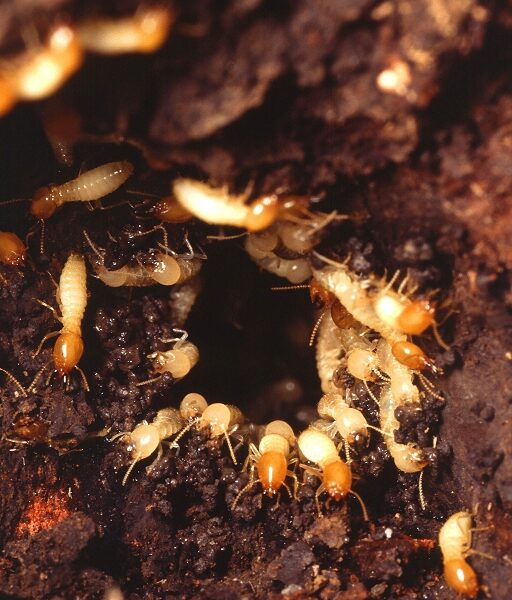
Termites are significant structural pests that can cause considerable damage to school buildings if not properly addressed. Termites are small, social insects that feed on wood and other plant materials and live in large colonies underground and inside structures. Knowing signs of termite infestation, biology and treatment methods is an important part of practicing integrated pest management (IPM).
As summer approaches and insects become more active, keep an eye out for two key signs that you may be dealing with termites: structural damage and mud shelter tubes. Structural damage from termites looks like sunken, trail-shaped areas on walls (Figure 1) as well as formations of dried mud sprouting from the walls and ceilings. In extreme cases, you may find a sagging floor or roof. Mud shelter tubes (Figure 2) are commonly found outside near the foundation of buildings, but they can also be seen near roofs, walls and insulation. If you see what you suspect is a mud shelter tube, you can break a one-inch section of the tube and see if it contains termites or see if they rebuild the tube over the next few days. Any of these indicators calls for a professional inspection (Layton, n.d.-d). Learn more about monitoring for insect pests such as termites in this blog post from the Pest Defense for Healthy Schools.
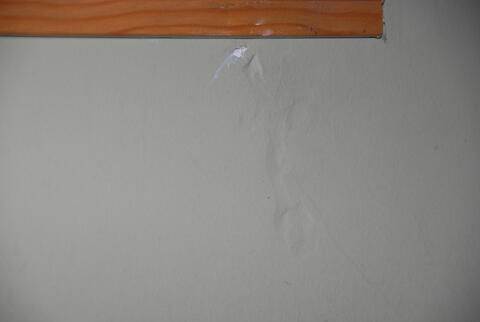
Figure 1. Sunken trails from termite feeding inside walls. (Layton, n.d.-d)
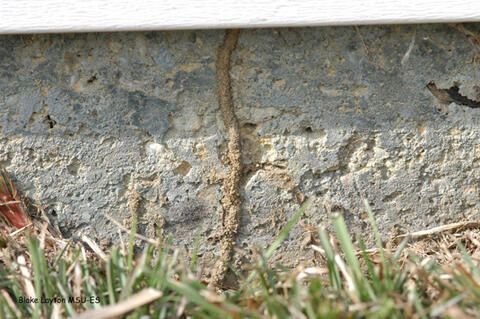
Figure 2. Mud tube structure along the foundation of a house, connecting the soil and building. (Layton, n.d.-d)
Another way to identify termites is by their distinctive swarming behavior, which will typically occur on a spring day after a rainstorm. A well-established termite colony will produce “swarmers,” the winged, reproductive adults that break away to form a new colony. During this event, male and female termites will pair up, mate, lose their wings and quickly search for a place on the ground to lay eggs and build the nest. At this time, the pair will form a “train” with the male following the female. This behavior is distinctive and can help distinguish the swarm from other types of insects, including ants, which also swarm (Crawley and Hayes, 2023). A termite swarm can happen inside or outside of a school and other structures.
Termites are sometimes confused with ants. A differentiating feature is that termites have straight or slightly drooping antennae, while ants have antennae bent at a 90-degree angle. If you are looking at winged adults, termites will have wings equal in length and ants will have front wings longer than hind wings (EPA, 2025). Additionally, termites have no “waist,” and the abdomen is broadly joined to the thorax while ants have a distinctive narrow waist (Layton, n.d.-a). If you are unsure whether you have an ant or a termite problem, or would like to identify the termite species, Mississippi State University Extension offers mail-in identification services at no cost (Layton, n.d.-b).
Termites are social insects, meaning that a colony consists of different types of individuals with specific roles. Worker termites are white, soft-bodied, sightless and make up 90 to 98 percent of the colony. Their responsibility is to care for the young, build tunnels and forage. Soldier termites, which make up between two and ten percent of the colony, have the role of protecting the colony and have enlarged mandibles. Neither of these types will reproduce (Bennett, 2017; Layton, n.d.-e).
Reproductive termites are the male and female, also called the king and queen, that founded the colony after the swarm. They have several unique features, including pigmentation and eyes, and can live up to 15 years. Some species also form additional reproductives besides the king and queen (Layton, n.d.-e).
Termiticides are typically applied during the construction of a building, shortly after construction and periodically throughout the life of a building. Liquid formulations are the most common type of pesticide for termites and are applied to the soil under the foundation of a building during construction as well as around the foundation after construction. Foam termiticides, treated wood and baiting stations are also used to control termites (Layton, n.d.-c). As with any other pesticide application, these treatments should be done by a professional as part of an IPM plan.
Termites are a fascinating but destructive group of insects. Understanding indicators, biology and treatment strategies is an essential component of IPM.
To learn about other school pests, check out these blog posts from the Pest Defense for Healthy Schools:
Sources
Bennett, G. W. (2017, November). Termite Control. Purdue University Extension Entomology. https://extension.entm.purdue.edu/publications/E-4/E-4.html
Crawley, S., & Hayes, C. C. (2023, February 24). Termite Swarmers – What Do They Mean for You?. NC State Extension Publications. https://content.ces.ncsu.edu/termite-swarmers-what-do-they-mean-for-you
Layton, B. (n.d.-a). Are These Termites or Ants?. Mississippi State University Extension Service. https://extension.msstate.edu/insects/termites/are-these-termites-or-ants
Layton, B. (n.d.-b). Insect Identification Service. Mississippi State University Extension Service. https://extension.msstate.edu/insects/termites/insect-identification-service
Layton, B. (n.d.-c). Methods of Termite Control. Mississippi State University Extension Service. https://extension.msstate.edu/insects/termites/methods-termite-control
Layton, B. (n.d.-d). Signs of Termite Infestation. Mississippi State University Extension Service. https://extension.msstate.edu/insects/termites/signs-termite-infestation
Layton, B. (n.d.-e). Termite Biology (Eastern subterranean termites and Formosan termites). Mississippi State University Extension Service. https://extension.msstate.edu/insects/termites/termite-biology-eastern-subterranean-termites-and-formosan-termites
Termites: How to Identify and Control Them. EPA. (2025, October 21). https://www.epa.gov/safepestcontrol/termites-how-identify-and-control-them